What is a Forex Demo Account: Definition and How to Create It
A forex demo account is a place where traders can simulate trading completely for free. Here, you can use the trading platform, execute orders to practice or test strategies without facing any risks.
Whether you are a beginner learning to trade Forex or an experienced trader looking to refine or test your strategies, a demo account is an essential tool for you. On this page, we will explore what a demo account is, its purpose, and how to create a free demo account. We will guide you through the process of registering for a demo account at all domestic and international brokerage firms. Get ready to embark on your journey in the world of Forex trading!
What is a Forex Demo Account?
A demo account is a type of account mostly offered by online Forex brokerage firms, where traders (especially beginners) can practice online Forex trading in an environment similar to real conditions, but without the risk of losing real money or capital.
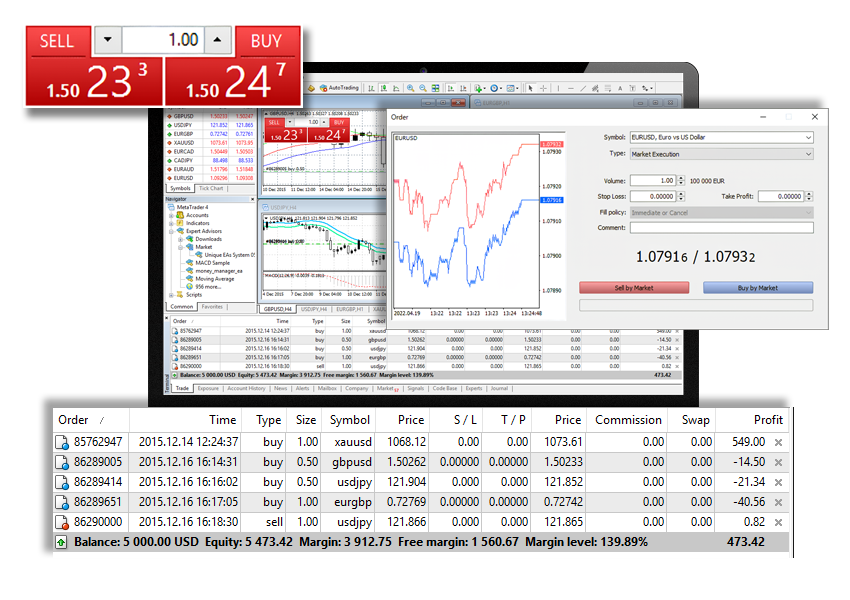
Traders can observe price fluctuations in the Forex market through the trading platform (application or software) provided by the brokerage along with the demo account. Additionally, traders can execute buy/sell orders or close trading positions, practice strategies, and perform other activities comprehensively according to real market conditions. Notably, when using a Forex demo account, you do not need to deposit any real money or capital.
In the demo account, the amount of money (balance) for trading is virtual money (not real money) provided free of charge by the Forex broker. Therefore, if you make a profit, that money cannot be withdrawn. Conversely, if you incur losses, you also do not lose real money. Don't worry, as the brokerage will not require you to compensate for any losses incurred in the Forex demo account.
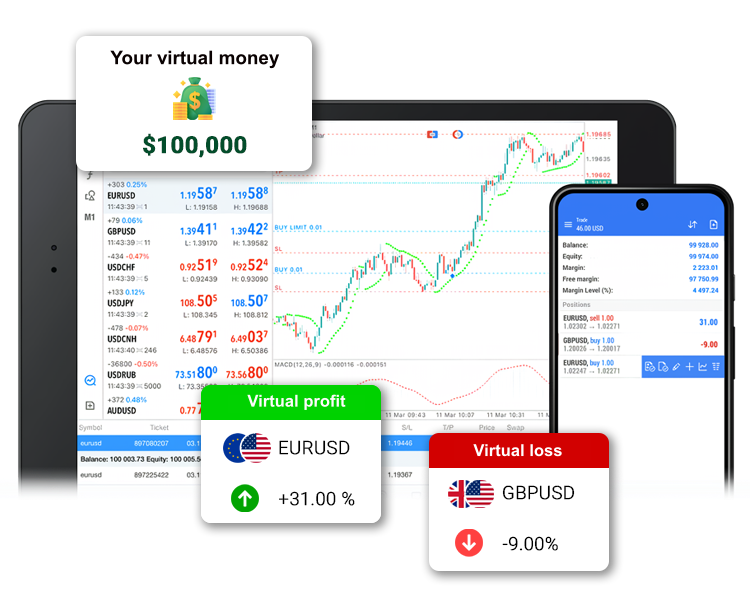
You can also open a demo account at any brokerage firm. There are no regulations restricting this, so you are free to register for a demo account at any firm you choose. You can try the demo account to receive convenient support as well as experience customer service that meets global standards before starting real trading.
Purpose of a Forex Demo Account
- For new traders (beginners), a Forex demo account will provide a very realistic view of online Forex trading with the brokerage.
- The Forex demo account is particularly useful for practising trading skills before traders decide to use a real account at the Forex brokerage, while also helping to practice analysis and order placement in real market conditions.
- Both new traders and experienced individuals can use the Forex demo account to freely test trading systems, safely, without the fear of losing money when making mistakes.
- For traders who are in the process of learning or choosing a brokerage, they can register for a Forex demo account to see how the technical performance (server, speed, etc.) of that brokerage operates.
How to Create a Forex Demo Account
Registering or opening a Forex demo account is completely free. You can carry out this process very easily and quickly (in less than 10 minutes). Examples of some recommended brokerage firms for you to start trying a demo account are:
- How to Create a Demo Account - Exness
- How to Create a Demo Account - FBS Brokerage
- How to Create a Demo Account - IC Markets
A Forex demo account is a free tool provided by brokerage firms, very useful for new traders to learn and practice online Forex trading. Since it only uses virtual money (not real money), you are completely at no risk of financial loss. However, the trading experience on the demo account will not be entirely the same as real trading, especially in terms of psychology and emotions.
The pressure of trading with real money will be completely different from using a Forex demo account. To make the most of the demo account's functionality at the Forex brokerage, you can refer to the tips for practicing on the demo account before registering in the next section below.
Tips for Trading on a Demo Account
Below are some effective trading tips on the demo account that can help you optimize your learning experience and prepare for trading on a real account:
1. Define Clear Goals
- Test New Strategies: Use the demo account to experiment with trading ideas without the fear of losing. This is a great opportunity to try various methods before applying them to a real account.
- Learn How to Use the Trading Platform: The demo account allows you to familiarize yourself and practice with the trading platform. Learn how to open and close positions (orders), set stop-loss and take-profit orders, as well as use other basic technical analysis tools.
- Manage Emotions: Train yourself to remain calm and disciplined when the market is volatile. Although the money used is virtual, this lesson is very important for preparation when transitioning to trading with real money.
2. Simulate Real Conditions
- Set Virtual Money: Set the demo account balance appropriate to the capital you plan to use in the real account. This helps you manage expectations and capital management strategies.
- Leverage: Experiment with different leverage levels to understand its impact and risks on your account.
- Drawdown: Use the demo account to understand how your strategy reacts when the account experiences a drawdown.
3. Understand the Trading Platform
- Learn the Interface: Familiarise yourself with all the features in your trading platform, from analysis tools to order types such as market orders, limit orders, and stop orders.
- Try Different Features: Explore additional functions such as backtesting, charting tools, and other features to understand how to make the most of the tools available on the trading platform.
4. Plan Your Trades
- Basic Strategy: Use the demo account to develop your trading strategy. Start with simple methods, such as Moving Averages crossover, to advanced strategies like price action analysis.
- Risk Management: Set strict risk management rules, such as limiting maximum risk to 1–2% of total capital for each trade.
5. Practice Consistency
- Stick to Your Trading Plan: Follow your trading plan with discipline, as if you were using real money. This helps you train your commitment to the strategy you have set.
- Record Every Trade: Create a trading journal to document each trade. Review the results regularly to identify strengths and weaknesses in your strategy.
- Discipline: Avoid overtrading just because the money in the demo account is not real. Remember that the main goal is to learn, not to make large profits in a short time.
6. Test Strategies in Different Market Conditions
- Volatility: Test your strategy in different market conditions, such as trending, consolidating, or high volatility.
- Different Currency Pairs: If trading forex, try your strategy on different currency pairs to see how it performs in various situations.
7. Review and Analyse
- Evaluate Emotions: Pay attention to your reactions to wins and losses. Recognise your emotional patterns before transitioning to a real account.
- Regular Review: Review all your trades regularly. Identify what works, what doesn’t, and why.
- Develop Strategies: Use your experience on the demo account to improve or adjust your strategy to become more effective.